Comprehensive Gut Test Including Parasites, Worms & More
Gut Microbiome Mega is our latest and most extensive gut health test. This test provides insights into whether you have leaky gut, yeast overgrowth (including Candida), Helicobacter pylori, and the levels of key gut bacteria such as Bifidobacterium and Lactobacillus, along with many other beneficial and potentially harmful bacteria. It also analyzes your digestive function, potential malabsorption issues, and the presence of undigested food residues.
Additionally, the test provides information about your gut microbiome diversity, enterotype, and dysbiosis index, helping you understand the balance of your gut flora. To offer the most complete picture of potential factors affecting gut health, we have included screening for worms and other parasites within the same test. Lastly, the test measures bacterial metabolites and other microbial byproducts that influence overall health.
DNA-Based Gut Testing
Gut Microbiome Mega uses advanced DNA analysis, allowing for highly precise identification, characterization, and categorization of even small amounts of bacteria and microorganisms. This significantly reduces the risk of inaccurate results and ensures that any parasites or pathogens present are detected.
This test is ideal for anyone looking to investigate the root cause of their health issues. Whether you experience digestive disorders such as IBS, IBD, Crohn’s disease, or ulcerative colitis, struggle with weight management, suffer from neurological conditions like Alzheimer’s or Parkinson’s, have unexplained depression, or experience vague symptoms with no clear cause, this test provides crucial insights into imbalances and other factors affecting your gut health.
Additionally, Gut Microbiome Mega screens for leaky gut.
What is Leaky Gut?
Leaky gut refers to microscopic gaps in the intestinal lining, allowing particles such as undigested food, bacteria, and other substances to pass into the bloodstream. Since these particles are not meant to be in the blood, the immune system perceives them as threats and reacts by attacking various tissues in the body. Depending on where this occurs, it can contribute to a range of health conditions, including hypothyroidism/hyperthyroidism, psoriasis, multiple sclerosis (MS), allergies, IBS/IBD, chronic fatigue, and various autoimmune diseases.
If left unaddressed, leaky gut can lead to symptoms such as food intolerances, digestive issues, fatigue, brain fog, weakened immunity, skin problems, joint pain, depression, and more. Since leaky gut does not typically cause noticeable symptoms on its own, many people may have it for years without realizing it could be the root cause of other health concerns. Testing for leaky gut is therefore crucial for those experiencing chronic health issues.
What Does the Gut Microbiome Mega Test Measure?
Archaea & Bacteria:
- Actinobacteria / Bifidobacterium spp.
- Archaea / Methanogens
- Methanobrevibacter spp.
- Bacteroidetes / Prevotella spp.
- Clostridium
- Escherichia coli spp.
- Firmicutes
- Butyvibrio spp.
- Coprococcus spp.
- Eubacterium spp.
- Faecalibacterium prausnitzii
- Roseburia spp.
- Ruminococcus spp.
- Fusobacterium
- Lactobacillus spp.
- Proteobacteria
- Acinetobacteria spp.
- Citrobacter spp.
- Enterobacter spp.
- Hafnia spp.
- Klebsiella spp.
- Morganella spp.
- Proteus spp.
- Providencia spp.
- Pseudomonas spp.
- Serratia spp.
Sulfur-Reducing Bacteria:
- Bilophila wadsworthii
- Desulfomonas pigra
- Desulfovibrio piger
Verrucomicrobia:
Pathogenic Bacteria:
Yeast & Fungal Overgrowth (Candida & More):
- Candida albicans
- Candida dubliniensis
- Candida glabrata
- Candida krusei
- Candida lusitaniae
- Candida parapsilosis
- Candida tropicalis
Gut Microbiome Mega also analyzes:
- pH level
- Microbiome diversity/species richness
- Enterotype classification
- Dysbiosis index
- Zonulin (leaky gut marker)
- Histamine-producing bacteria
- Digestive byproducts
- Secretory IgA
- Fecal elastase
- Bile acids
- Alpha-1 antitrypsin
- Calprotectin
- Secondary bile acids
- TMA/TMAO
- Indoxyl sulfate
- Phenols
- Ammonia
- Equol
- Beta-glucuronidase
- Ratio of key bacterial groups
How the test works
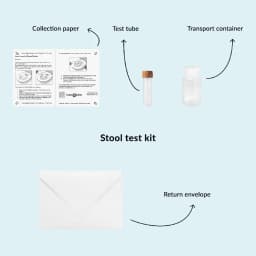
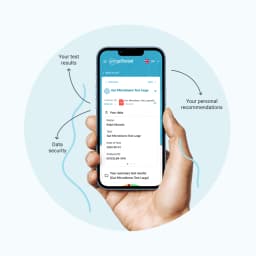
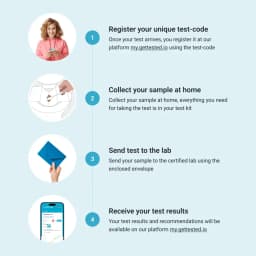
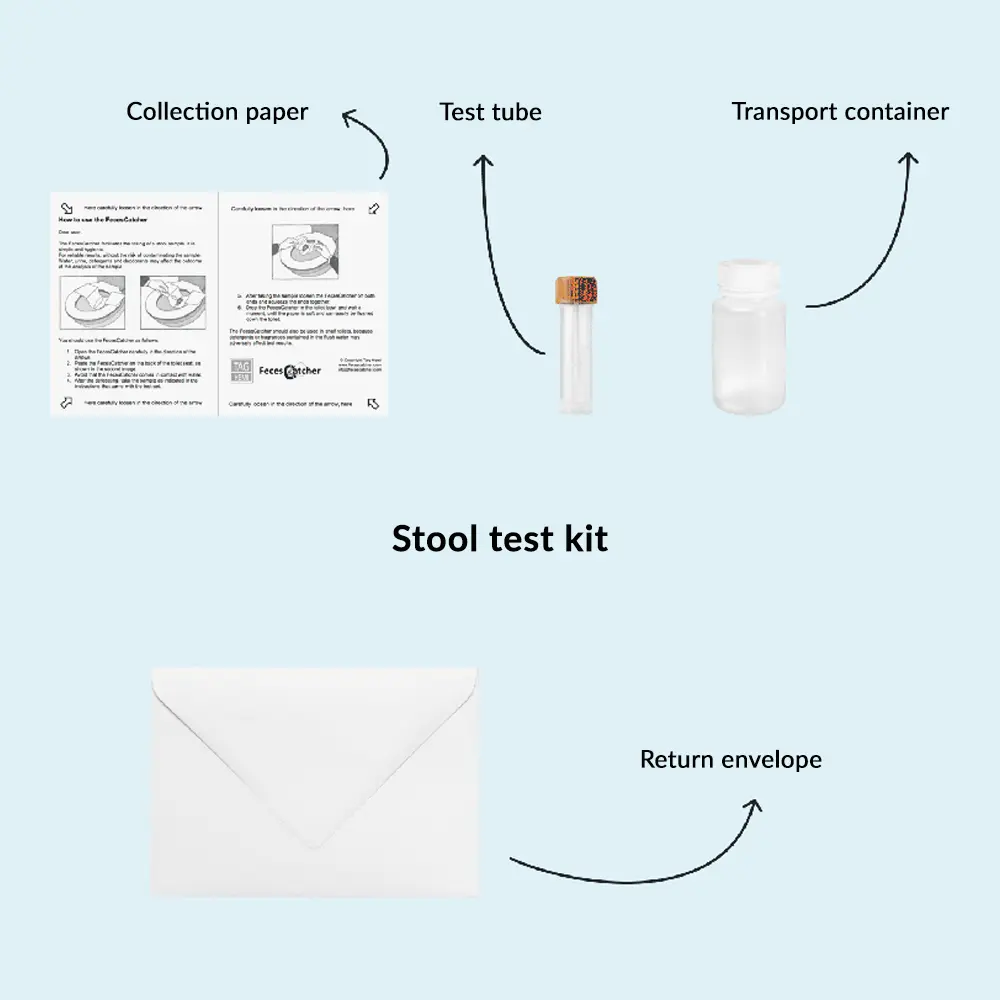
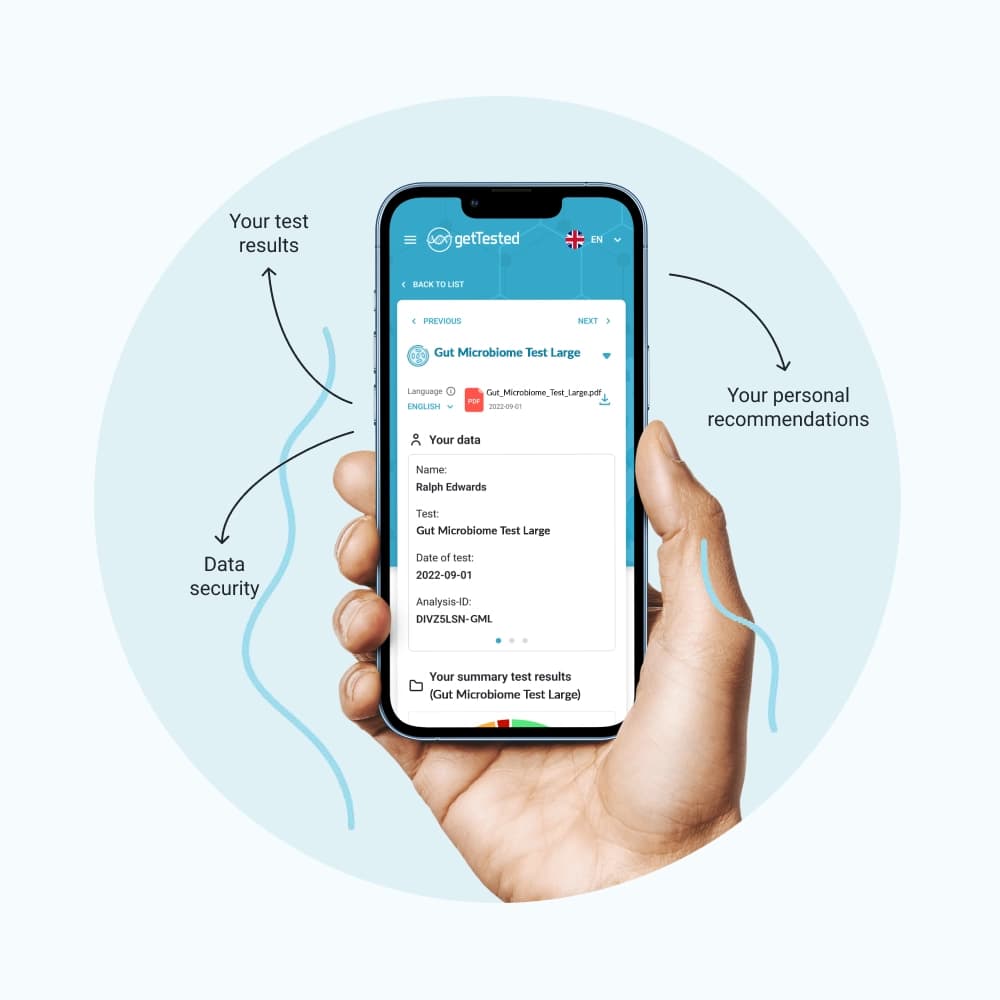
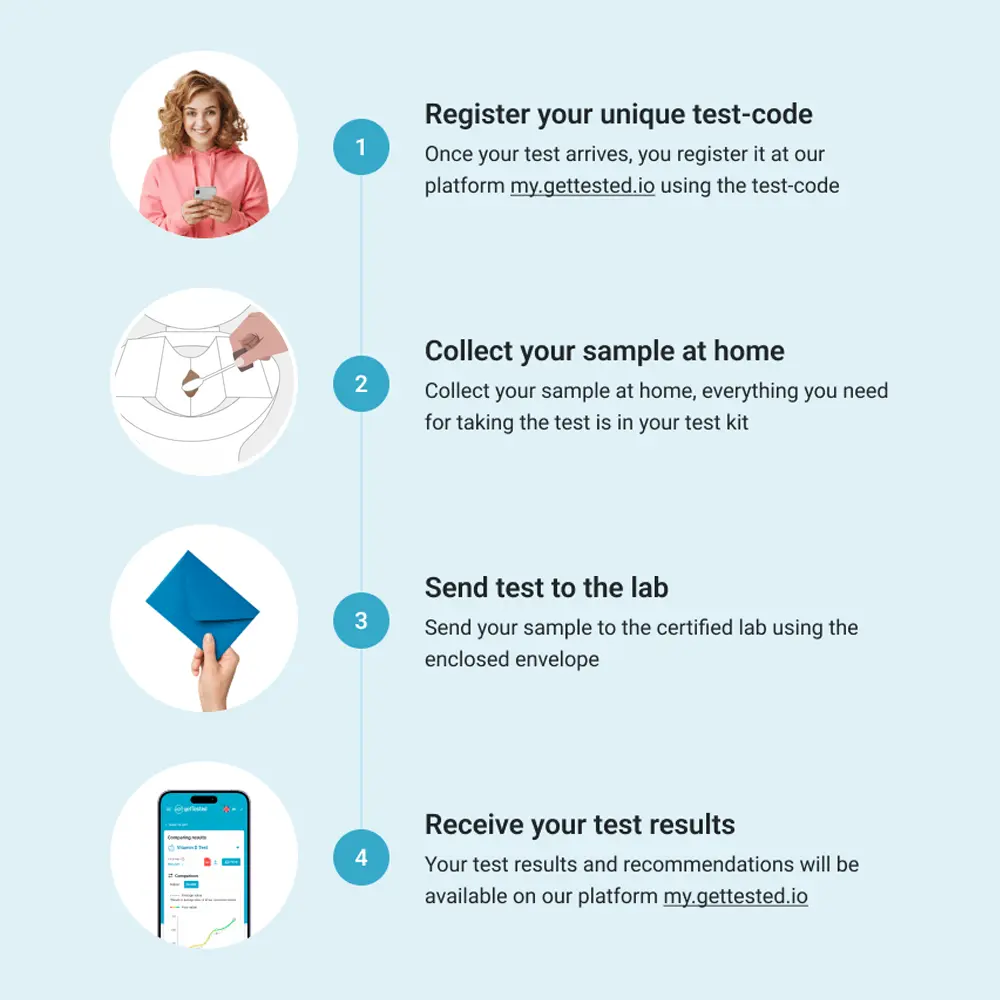
This is a simple stool test that you collect yourself at home using three sample tubes. The sample is then sent to the laboratory for analysis, and your results are delivered digitally.
Please note: Avoid taking probiotics for 7 days before collecting the sample and antibiotics for 4 weeks before the test.







 In stock
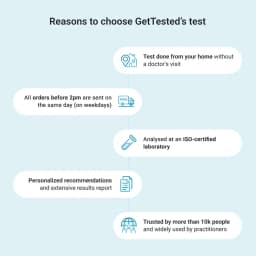
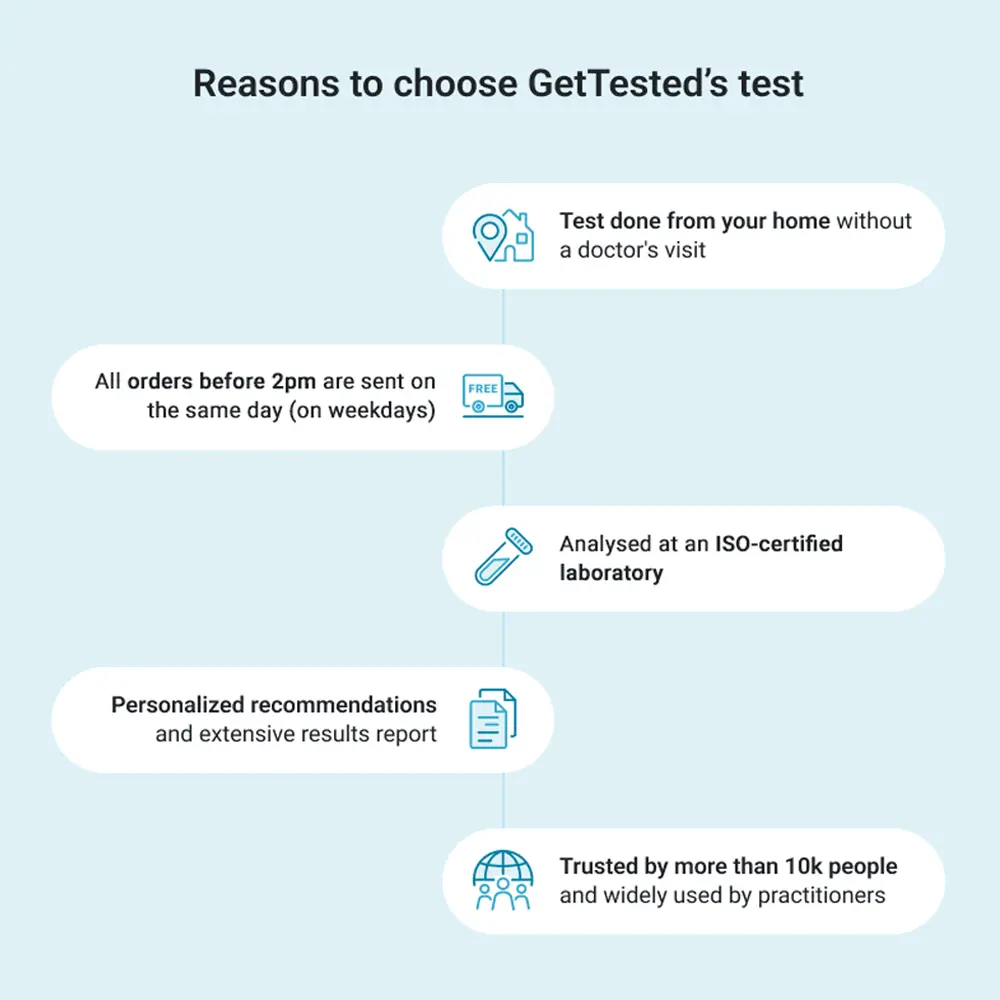
 Easy to use
 Fast Delivery